You won’t see me following you back home.
The empty sidewalks on my block are not the same,
You’re not to blame.”
– The Left Banke

Ummm, no...
We fired a prospect today.
Or, to put it more politely, we elected to adhere to our corporate and personal values, trust our instincts and cut our losses.
Either way you put it, we walked away from a potential client in the midst of a stunningly long economic slow-down that all of us are just plain tired of talking about.
Why? Because it made sense. And dollars and cents.
We had had two exceptionally good meetings with the management team of a start-up here in North Carolina. Over the course of those sessions and a bevy of phone calls and emails, we felt we’d built up quite a rapport with them. In fact, we left the last meeting pretty much being told “You guys get us completely, and we’re looking forward to working with you.” We were smiling.
Now, our radar had been going off every now and again during our meetings as the company has yet to build a working version of its product that they believe will revolutionize their industry. All they have now is a prototype, a couple of patent pendings, manufacturing partners and money from friends and family. But if the product works as they hope, it very well could revolutionize an industry that touches virtually every one of us at home, work and school.
“If the product works…”
In our 26-plus years in this business, we can’t count the number of folks who came to us convinced they were going to revolutionize the world with a “groundbreaking,” “cutting-edge,” “truly innovative” (as if anything can be “falsely innovative”) and “game-changing” idea. (Think dot-coms here whose business plans were written on the backs of napkins.) But that’s not the main reason we declined (politely) to ask these guys to the prom. The primary reason was understanding and respect – a lack of understanding of what public relations is and an apparent lack of respect for it.
Yeah, yeah, we know; no real news here. But the lesson is still an important one.
As they are bootstrapping the company at this point, there’s just not a lot of extra cash sitting around. We understand tight budgets. Who doesn’t? So they had asked if we would consider keeping our fees low in the beginning and taking equity in exchange for some of the dollars. In all our years, we had never agreed to trade fees for equity, but this time we decided to give it a try as the product is seriously cool and would be a blast to help launch (assuming it works, of course).
We wrote our proposal to cover the usual stuff you cover in a strategic communications program: branding, messaging and the development and execution of an integrated public relations program. The budget was modest. Like really modest. Like way below six figures to support a regional launch (followed then by a national launch) over the next nine months. Pretty standard fare for a PR proposal, right? And we included a suggested budget split of two-thirds in cash and one-third in equity. We submitted the draft proposal for review.
The next day, the marketing veep writes back:
(1) the president will never approve a budget like this;
(2) you really ought to consider revising your fee structure and stretch it out over a longer period, say two or three years;
(3) you can have “profits interest” not equity (meaning we’ll get paid if and when they are profitable); and
(4) by the way, we’ve been talking to another firm that does marketing and design and it looks like you’re proposing to do work that overlaps with them. We need you to do the PR, not branding and messaging.
Now we’ve never been hesitant to put our credentials up against anyone, and we rarely, if ever, have backed down from a pitch. But this felt different. This felt as if we were being asked to be only a media pitch shop (“Just get us some PR so everybody in the U.S. hears about us. You know, send out some news releases and get ’em placed in the trades.”). He was seeing that age-old delineation between public relations and marketing/advertising. “Those guys will handle all the branding, messaging and all the marketing because they know how to do; we just need you to get us ink. And that really shouldn’t cost all that much, should it? Because we don’t have that much money right now, and we’ll have to pay the other firm.”
Heck, the prospect even struck through the word “marketing” when we used it in the term, “marketing public relations.” Clearly, we’re not speaking the same language much less being on the same page.
Now we’re not saying there’s anything wrong with being media specialists. Quite frankly, I admire folks who slog away at that every day and achieve meaningful results for clients. Gosh knows, they earn their pay, and it’s not something I want to do full-time (heck, I’d be on top of a book depository with a .30-06 inside of three weeks).
But the main point here is that being a media shop is not what Forge Communications was founded to be, it’s not what we want to do and we know that’s not how we can best help build value for our clients. We know firms that do that well for much less money, and we’re happy as mollasks to recommend them.
We believe we contribute most when we are full and equal partners on the business leadership team. We bring the most to the table when we’re allowed – wait, that’s wrong – when we’re invited to offer counsel and service that’s based on decades of experience helping companies of all shapes and sizes solve challenges so they can move into the future with confidence. When strategic communication consultants are told to keep their opinions to themselves and just stay put in the traditional “media shop box” – especially when traditional media are dissolving in front of our eyes( and may well be the wrong channel to use in the first place) – both the consultants and the clients lose. And neither we nor clients like it when scarce financial resources are squandered.
In this case, we decided a win-win could best be reached if we just walked away. No blood, no foul.
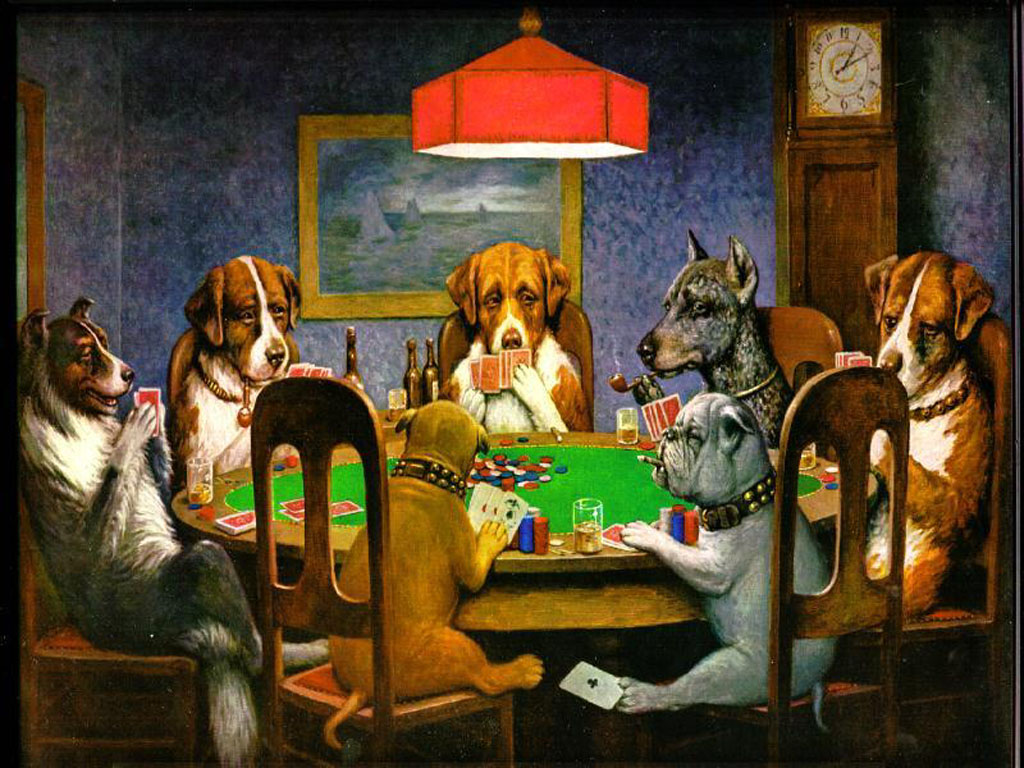
This really needs no caption...
You gotta know when (and here’s the important part) and be willing to fold ’em for your business and the client’s business.
And you know what? It feels really, really good.